
In the complex architecture of modern machinery and automotive systems, small components often carry the heaviest burdens. The ball stud—a precision fastener featuring a spherical head and a threaded or formed shank—is a primary example. Serving as a crucial pivot point, it enables smooth articulation and rotational movement between connected components.
For original equipment manufacturers (OEMs) in the automotive, industrial machinery, and consumer electronics sectors, the performance of a ball stud can be the difference between system longevity and catastrophic mechanical failure.
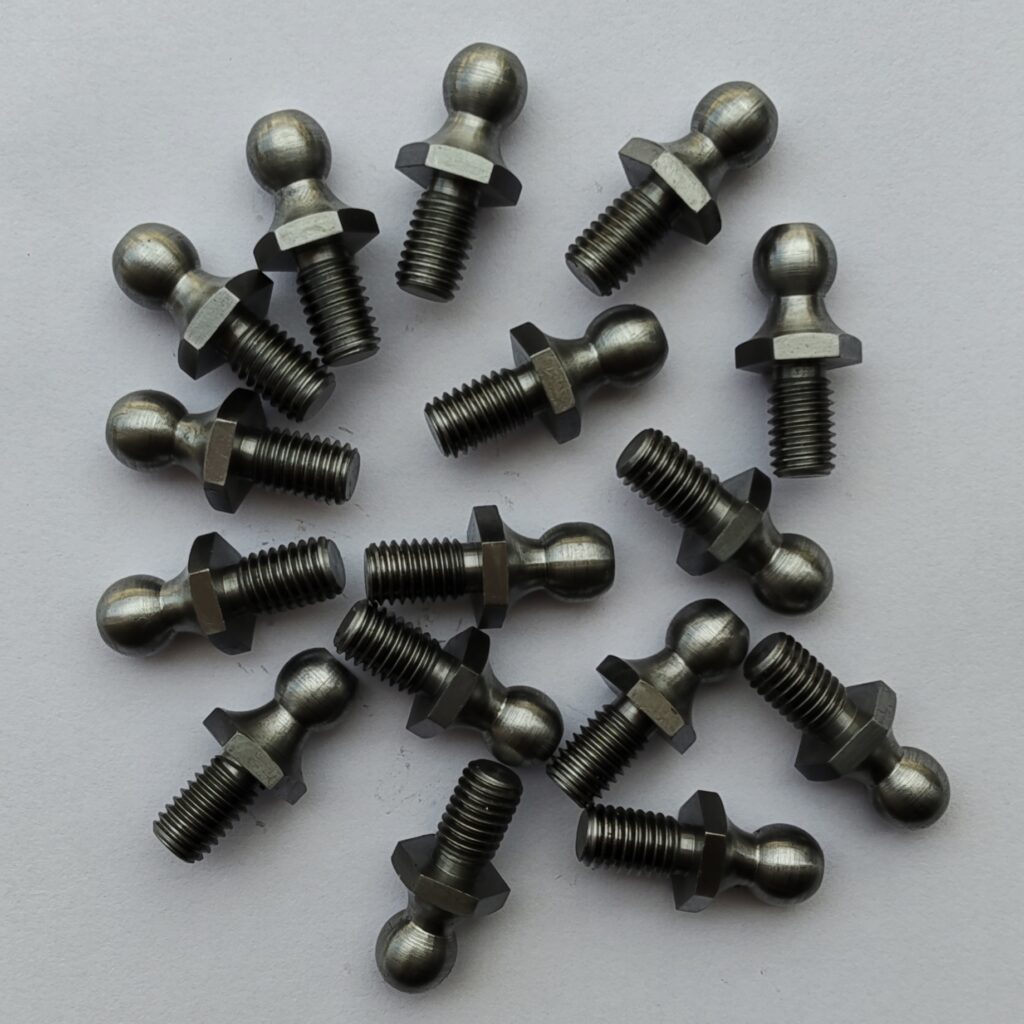
The Functional Core: Where Ball Studs Excel
A ball stud’s primary role is to provide a stable connection while accommodating angular adjustments and misalignment. This 360-degree flexibility makes them indispensable in several high-stakes applications:
Automotive Suspension & Steering: Ball studs connect control arms to the chassis and are integral to tie rod ends and ball joints, facilitating smooth suspension travel and precise steering.
Motion Control & Gas Springs: They serve as the secure connection between gas struts and moving parts like hoods, trunks, and heavy tailgates, absorbing the forces generated during opening and closing.
Industrial Linkages: In automation and robotics, ball studs are used in mechanical linkages and actuators to allow for complex multi-axis movements.
Strategic Material Selection and Surface Integrity
The operating environment dictates the material and treatment requirements for a ball stud. High-stress applications require materials that balance load capacity, shear strength, and fatigue resistance.
High-Strength Carbon Steels: Alloys like EN 8, EN 8D, and SAE 1045 are commonly used for their excellent strength-to-weight ratio and response to heat treatment.
Stainless Steel (304/316): For marine or chemical environments where moisture and corrosive agents are present, stainless steel provides superior corrosion resistance and an extended service life.
Specialized Treatments: Surface integrity is a critical quality control point. Surface treatments such as zinc plating (clear, yellow, or olive green), phosphating, or chrome plating are applied to prevent pitting and corrosion. Hardening processes, such as induction hardening, are often utilized to increase the strength of critical surfaces and improve wear resistance.
Manufacturing Excellence: Machining vs. Forging
While high-volume ball studs are often produced via forging to align the metal grain flow for maximum toughness, CNC machining remains the superior choice for high-precision, custom-engineered components:
Precision and Tolerances: Precision machining ensures that ball studs meet tight tolerances—often within ±0.01 mm or even down to 10 microns—which is essential for smooth articulation and reduced wear in high-speed machinery.
Complex Geometries: Advanced Swiss Type 5-Axis Sliding Head CNC Turn Mill Machining allows for the production of ball studs with intricate profiles, non-standard dimensions, and integrated features like grease fittings in a single setup.
Prototype & Small Batch Support: Machining is the ideal process for development phases and low-volume runs where the high initial cost of forging dies cannot be justified.
Designing for Reliability: The DFM Perspective
To optimize the Total Cost of Ownership (TCO) and ensure performance, Design for Manufacturability (DFM) must be integrated early in the process. Key design considerations include:
Pull-Out Strength: The design of the ball and neck must be optimized to resist the severe axial and radial forces that could otherwise pull the stud from its housing.
Surface Roughness: Smoother surface finishes (Ra values) reduce friction and microscopic crevices where moisture can accumulate, directly extending the component’s fatigue life.
Tolerance Balancing: Applying elite “ultra-precision” tolerances (±5 µm) only to critical mating surfaces while keeping non-critical dimensions more open reduces machining time and inspection costs.
Your Partner in Precision Sourcing
For over two decades, Mech Source has operated as a trusted partner for the Automotive and Engineering industries, delivering ISO 9001:2015 certified components that meet exact customer drawings. Our commitment to process integrity and material traceability ensures that every ball stud we manufacture or source provides the reliability your mission-critical systems demand.
Whether you require prototype development or a long-term supply of high-precision components, our qualified experts are ready to study your requirements and provide a transparent feasibility analysis and quote.
#BallStuds #PrecisionMachining #AutomotiveEngineering #CNCTurning #SwissMachining #IndustrialFasteners #DFM #SupplyChainResilience #OEMManufacturing